

Why Your New Landscaping Fails: Fixes & Prevention



Last Updated: October 24, 2026
Quick Summary
A landscaping fail usually comes from site problems, not bad plants: water that can't drain, water that never arrives, roots planted too deep, or compacted soil that was never prepared. Fix drainage and grading first, set every root flare at or above grade, and water deeply and infrequently through the first two seasons.
- Puddles lingering more than a day after rain mean a drainage problem, not a watering problem.
- Water newly planted shrubs two to three times a week during dry spells, soaking the root zone thoroughly.
- New landscaping takes one to two full growing seasons to establish, with trees and large shrubs taking longest.
- The root flare must sit at or slightly above grade, since burying it smothers roots and invites rot.
- Dig the hole wider than the root ball and loosen the surrounding soil instead of adding heavy amendments.
Table of Contents
- Why New Landscaping Fail: The Usual Suspects
- How to Fix Standing Water in Yard
- How Often to Water Newly Planted Shrubs
- How Long for New Landscaping to Establish
- Landscape Installation Mistakes That Set You Up to Fail
- Preventative Steps to Protect Your Investment
- Frequently Asked Questions
Why New Landscaping Fail: The Usual Suspects
New landscaping rarely fails because of bad plants or bad luck. It fails because of water, soil, and installation decisions made before a single shrub went in the ground. When a fresh bed looks tired by the second season, the cause is almost always one of four things: water that can't drain, water that never arrives, roots planted too deep, or soil that was never prepared to hold a plant in the first place. At Natures Companion Landscaping, we've spent years correcting exactly these problems for Central New York homeowners, and the pattern repeats with remarkable consistency. A landscaping fail is rarely a plant problem. It's a site problem wearing a plant costume. Below, we'll walk through each suspect, how to diagnose it, and what actually fixes it.
Four site problems explain nearly every new-landscaping failure, and each has a known fix.
- Standing water: Cause: Puddles linger more than a day after rain; Fix: Regrade beds, install French drain or dry creek bed
- Underwatering: Cause: Shallow daily sprinkling keeps roots near surface; Fix: Deep, infrequent soak two to three times a week
- Roots planted too deep: Cause: Root flare buried below grade; Fix: Set root flare at or slightly above grade
- Poor soil: Cause: Planting into compacted, unamended soil; Fix: Dig hole wider than root ball, loosen surrounding soil
How to Fix Standing Water in Yard
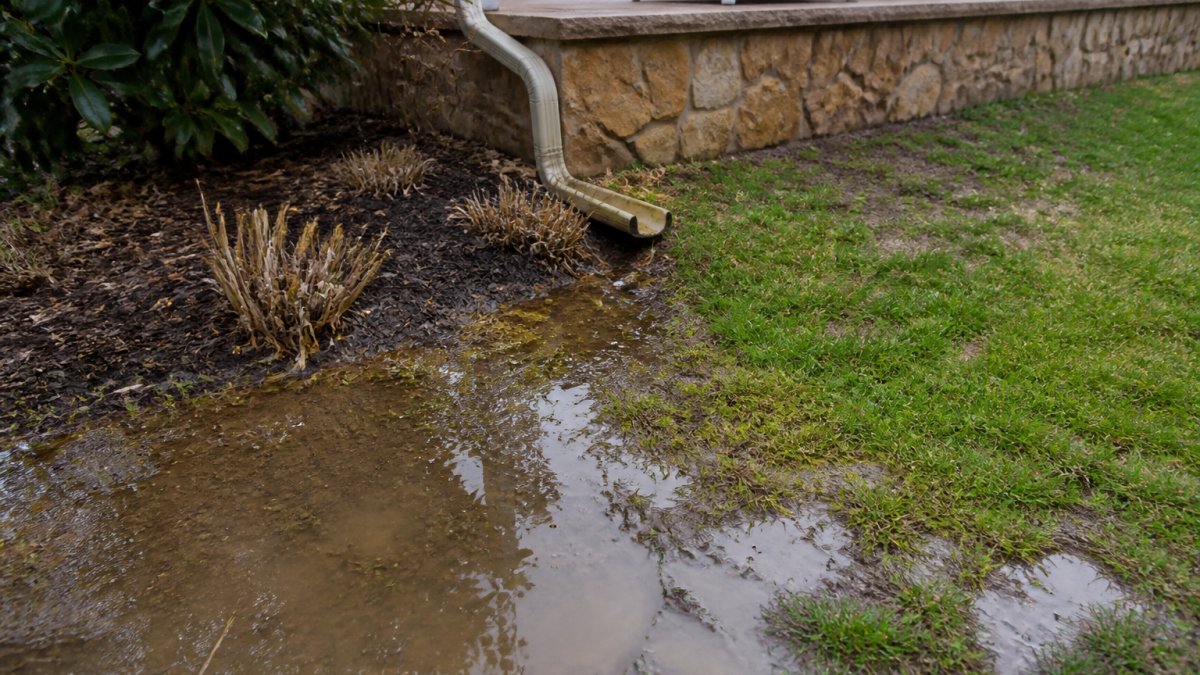
Standing water is the fastest route to a landscaping fail. If puddles linger more than a day after rain, the yard has a drainage problem, not a watering problem. Fixing it means moving water away from the house and giving it somewhere to go. That starts with grading and, when grading alone won't do it, a proper drainage system.

Grading and Drainage Corrections
The ground should slope away from the foundation on every side. A common mistake is backfilling beds so they sit level with, or higher than, the siding, which traps water against the house. Regrade those beds so soil drops a few inches over the first several feet. Where the lot itself is flat or pitches toward the house, install a French drain or a dry creek bed to intercept and redirect the flow. Both need an outlet. A drain that empties into a low corner of the yard just relocates the puddle.
When to Call a Professional
Call a professional when water pools near the foundation, when the slope can't be corrected without heavy equipment, or when the fix involves tying into storm drainage. Water against a foundation is a structural risk, not a cosmetic one, and the FEMA guidance on protecting homes from water damage is clear that managing surface water away from the structure is a first line of defense. We assess the grade, the soil, and the outlet before recommending a system.
How Often to Water Newly Planted Shrubs
Newly planted shrubs need deep, infrequent watering rather than a daily sprinkle. In the first season, water two to three times a week during dry spells, soaking the root zone thoroughly each time. Shallow daily watering keeps roots near the surface and sets the plant up to struggle.
The amount matters more than the frequency. A slow soak that reaches the full root ball encourages roots to grow down and out. Check the soil a few inches down before watering again; if it's still moist, wait. Overwatering drowns roots just as effectively as drought, and it's a quiet landscaping fail most homeowners don't spot until the leaves yellow. For shrubs on a slope or in sandy soil, water less often but longer, since both drain fast.
How Long for New Landscaping to Establish
New landscaping takes one to two full growing seasons to establish, with trees and large shrubs taking the longest. Establishment means roots have grown into the surrounding soil and the plant can survive on rainfall alone. Until then, it depends on you.
The first year is about root growth, not top growth. Don't panic if a new shrub looks sparse or drops leaves; transplant shock is normal. Keep watering through the first fall and even the following spring, because a plant that survived one summer can still fail the next if watering stops too soon. A common mistake is declaring success in August and abandoning the hose in September. That's when a slow landscaping fail begins. Expect full establishment by the end of the second season, and judge the planting by steady new growth, not by how it looked on installation day.
Landscape Installation Mistakes That Set You Up to Fail
Most landscape installation mistakes happen in the first few hours of a project. The plants go in, the beds look finished, and the problems are buried out of sight. Here are the two that cause the most failures.
Planting Depth and Soil Preparation
Plants set too deep are the single most common installation error. The root flare, where the trunk widens into the roots, must sit at or slightly above grade. Bury it and you smother the roots and invite rot. The second mistake is planting into compacted, unamended soil. Dig the hole wider than the root ball, loosen the surrounding soil, and skip heavy amendments that make the nursery soil and native soil behave differently. The USDA's guidance on planting and soil health stresses matching the plant to the site, which starts with knowing your soil.
Drainage and Grading Oversights
Installers who skip a drainage check are building a future landscaping fail. Before planting, confirm where water goes during a heavy rain. Beds that collect runoff from a downspout or a neighboring slope will drown anything planted in them. Route downspouts away from beds, and grade planting areas so they drain. If the site holds water, fix that first; no plant choice survives a bathtub.
Watch Out
Planting before you've solved drainage is the most expensive mistake in landscaping. You'll pay twice: once for the plants, and again to dig them out and fix the water problem underneath.
Preventative Steps to Protect Your Investment
Protecting new landscaping comes down to a short checklist you run at installation and again each season. These steps prevent the slow failures that show up a year later.
- Confirm the ground slopes away from the foundation on all sides
- Verify every plant's root flare sits at or above grade
- Check that downspouts and drains have a clear outlet
- Water deeply and infrequently through the first two seasons
- Add a few inches of mulch, kept off the trunks, to hold moisture and moderate soil temperature
- Inspect beds after heavy rain for pooling or erosion
- Re-check soil moisture before each watering rather than watering on a fixed schedule
The right installation partner makes this checklist automatic rather than a repair list. That's the difference between landscaping that lasts and landscaping that looks good for one season. Our owner personally oversees every project from design through installation, and our long-tenured crew handles the drainage and grading details that decide whether plants thrive or fail.
Pro Tip
Take photos of your beds right after a heavy rain in the first month. Where water pools tells you more about your drainage than any dry-day inspection ever will, and it gives you a clear record to act on before plants suffer.
Frequently Asked Questions
Why are my new plants dying after landscaping?
New plants often die from improper watering, poor soil preparation, or planting too deep. Check the soil moisture around the root ball; if it's soggy, you're overwatering, and if it's dry, you're underwatering. Also verify the plant isn't buried below its original nursery depth. For persistent issues, a professional can assess soil drainage and adjust your watering schedule.
How often should I water newly planted shrubs and trees?
Water newly planted shrubs and trees deeply once or twice a week, depending on rainfall and soil type. Aim for about 1 inch of water per week, applied slowly to the root zone. Avoid light daily sprinklings, which encourage shallow roots. In hot or windy weather, check soil moisture more frequently and adjust as needed.
Can poor drainage cause new landscaping to fail?
Yes, poor drainage is a leading cause of new landscaping failure. Standing water suffocates roots, leads to rot, and can undermine hardscape structures. If water pools after rain, regrade the area or install a French drain or dry creek bed. Fixing drainage before planting saves money and prevents plant loss.
How long does it take for new landscaping to establish?
Most new landscaping takes one to two full growing seasons to establish. Shrubs and perennials typically root within 6 to 12 months, while trees may need two to three years. Proper watering, mulching, and avoiding fertilizer in the first year support healthy establishment. Be patient and monitor soil moisture regularly.
A new landscape shouldn't need rescuing in its second year. If yours is showing the signs, the fix starts with diagnosing water, soil, and planting depth before anything else. At Natures Companion Landscaping, we bring French-quality craftsmanship, decades of hands-on experience, and full project oversight from design to installation, so your outdoor space is built to last and to add value to your property. Get a free estimate and let's build landscaping that holds up.
Get a Free Estimate
 Add naturescompanionlandscaping.com as a preferred source on Google →
Recent Blog




Let’s Plan Your Outdoor Project
Planning a patio, walkway or retaining wall for 2027? Request a free estimate. Include your town, approximate project size, preferred timing and budget range, if known, so we can discuss suitable options.


