

What Does It Cost to Install a Yard Catch Basin?



Last Updated: November 24, 2026
Quick Summary
The cost to install a yard catch basin typically runs $640 to $1,445 for a single 18-inch plastic basin with 30 feet of 4-inch PVC pipe, with a midpoint around $1,000. Digging and labor drive most of that price, while the basin and grate are the smallest line items.
- An 18-inch plastic catch basin with grate costs $40 to $90, and a cast-iron grate adds $30 to $60.
- Excavation and trenching runs $150 to $400, and clay or rock pushes it toward the high end.
- A two-person crew can set a basin and 30 feet of pipe in half a day in easy conditions.
- Call 811 before digging; utility locating is free and helps prevent accidental strikes.
- Choose a catch basin for one concentrated low spot and a French drain for long runs and broad seepage.
Tired of water pooling in your yard?We design and install drainage systems that move water away for good.Get a Free Estimate
Table of Contents
- How much does it cost to install a yard catch basin?
- Catch basin installation cost: what the line items actually are
- How to install a catch basin: step-by-step overview and materials list
- Catch basin vs. French drain: which fits your yard
- Yard drainage system cost: where a catch basin sits in the budget
- DIY vs. hiring a professional for your catch basin
- Get a Free Estimate for Your Drainage Project
- Frequently Asked Questions
How much does it cost to install a yard catch basin?
The cost to install a yard catch basin lands between a modest DIY parts bill and a few thousand dollars for a full professional system, depending on basin size, pipe runs, and how hard your yard is to dig.
A catch basin is simple: a box set into the ground, a grate on top, and a pipe carrying water away. The price swings come from what surrounds that box.
The assumptions behind every price range
Any estimate, including ours, rests on assumptions about your property:
- Basin size. A small 12-inch plastic basin for one downspout costs far less than an 18- or 24-inch unit that collects a whole low corner.
- Pipe run length. Short runs to a nearby discharge point are cheaper than long runs across a yard.
- Soil and slope. Sandy, well-draining soil digs easily. Heavy clay, buried rock, or a steep grade slows the work and raises labor.
Change any one of these and the price moves, which is why a neighbor's quote tells you almost nothing about yours.
Catch basin installation cost: what the line items actually are
Every catch basin project breaks into four cost buckets: the basin and grate, the pipe and fittings, the digging, and the labor to tie it all together. Understanding each line helps you read a contractor quote and spot padding. Below is an illustrative itemized breakdown for a typical residential installation.
The assumptions behind this example
We are pricing a single 18-inch plastic catch basin in a low corner, connected to 30 feet of 4-inch solid PVC pipe discharging to a daylight outlet at the curb. Soil is loam and clay with no buried rock, the basin is within 50 feet of the street, and the surface is lawn restored with seed and straw. No permit is required, and utilities are marked but not in conflict.
Itemized cost breakdown
- 18-inch plastic catch basin with grate: Typical range (USD): $40-$90; Notes: Includes basin body and plastic grate; cast-iron grate adds $30-$60
- 4-inch solid PVC pipe (30 ft): Typical range (USD): $45-$75; Notes: Perforated pipe costs similar; fittings add $15-$30
- Filter fabric and gravel: Typical range (USD): $25-$50; Notes: One roll of fabric and a half-yard of crushed gravel
- Excavation and trenching: Typical range (USD): $150-$400; Notes: Trencher rental or hand digging; clay and rock push toward the high end
- Labor (2-person crew, half day): Typical range (USD): $300-$600; Notes: Varies by market; includes setting basin, pipe, backfill, and test
- Disposal of spoil: Typical range (USD): $50-$150; Notes: If soil cannot be spread on site
- Surface restoration (seed and straw): Typical range (USD): $30-$80; Notes: Sod costs more
- Total: Typical range (USD): $640-$1,445; Notes: Midpoint around $1,000
The point is the structure: when a contractor quotes a number for a job like this, you can ask which line is driving the difference.
Basin material and unit price
The basin itself is the smallest line on most projects. Concrete is heavier and harder to set by hand, while plastic is lighter and easier to cut for pipe connections.
Grates matter too. A plastic grate is fine for foot traffic. A cast-iron or heavy-duty grate is a sturdier option for areas that are driven over. Match the grate to the load.
Trenching, excavation, and labor charges
Digging is where most of the money goes. A catch basin needs a hole deep enough to sit below grade, plus a trench for the pipe to the outlet.
A crew digging easy soil with good access finishes faster than one fighting roots and rock in a tight space. Ask any contractor how site conditions affect their quote, and expect a straight answer.
What a quote should include
A complete quote for this project should list the basin size and material, grate type, pipe diameter and length, excavation method, disposal, and restoration. If any of those are missing, ask. The most common surprise on a catch basin invoice is disposal or restoration added after the fact.
How to install a catch basin: step-by-step overview and materials list
A catch basin installation follows a set sequence: locate the low spot, dig the hole, set and level the basin, connect the pipe, backfill, and test with water. The steps are straightforward. The judgment is in placement and slope.
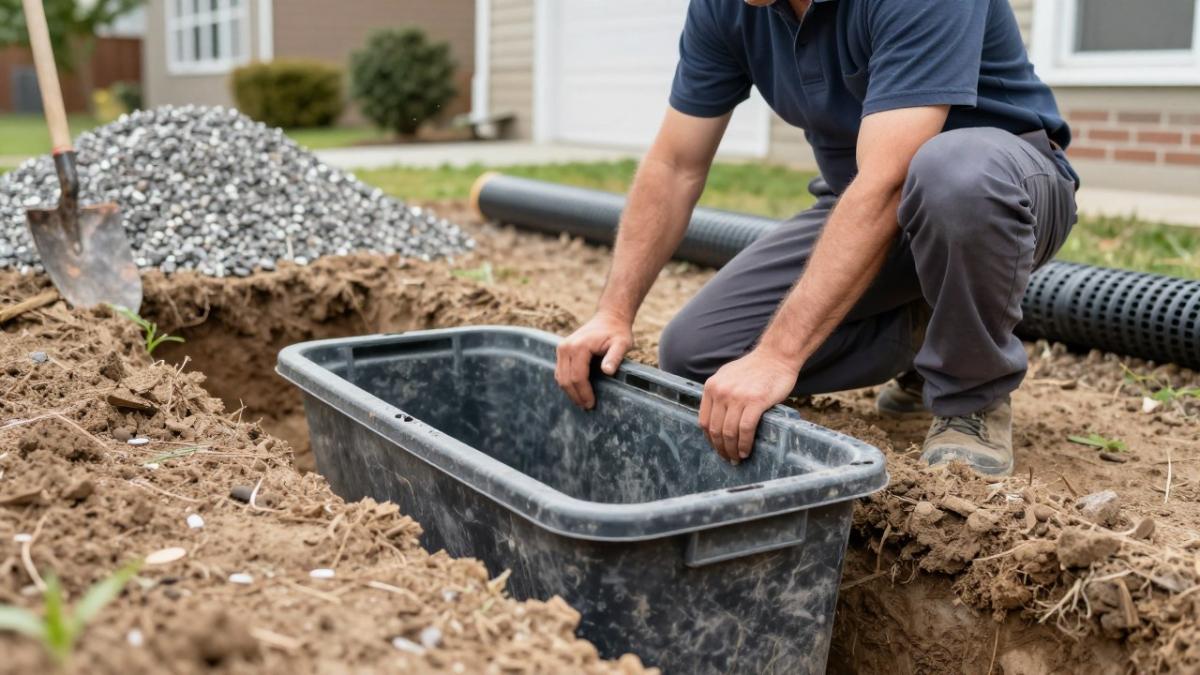
Complete materials list for a typical small residential basin
- Catch basin with matching grate (18-inch plastic is a common choice for a single low spot)
- 4-inch solid or perforated drainage pipe, sized to your runoff volume (30 feet is typical for a short run)
- Fittings and connectors: 90-degree elbows, couplers, and a transition adapter to the basin
Step-by-step installation
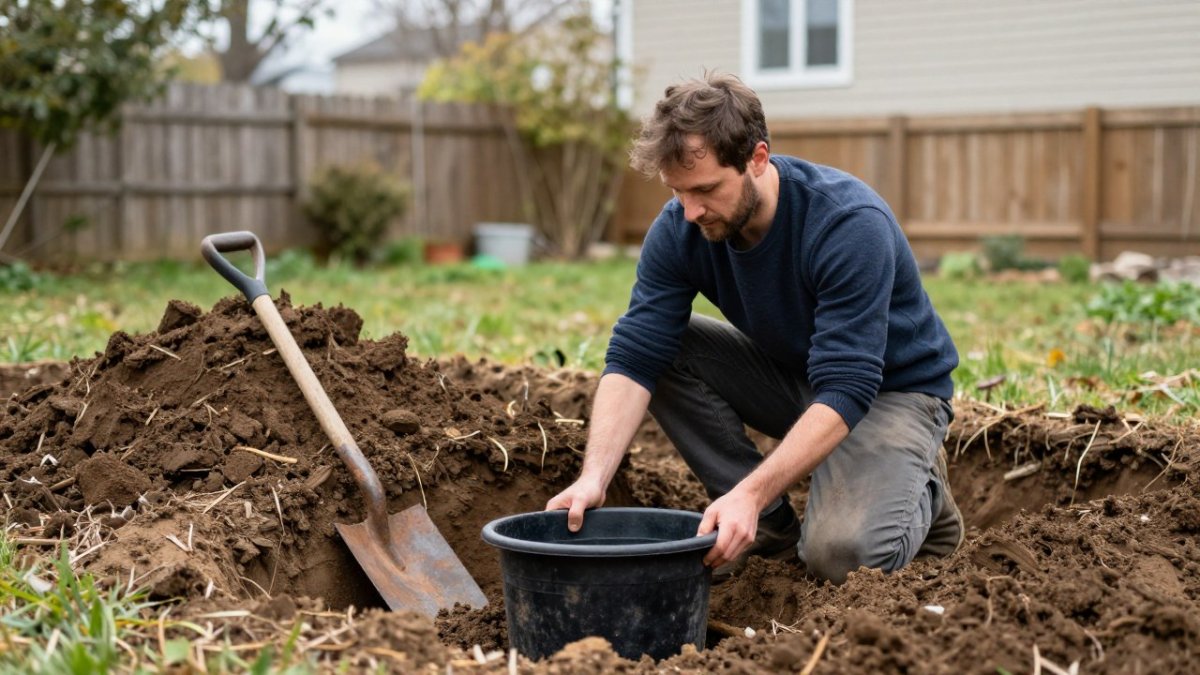
- Mark the low spot. After a heavy rain, watch where water stands longest. If water pools in more than one spot, plan a basin for each or a French drain between them.
- Call 811 before you dig. Utility locating through 811 is a free service that helps prevent accidental strikes before any excavation. Wait for the marks and respect the tolerance zone.
- Dig the basin hole. Make it wide enough to fit the basin with room to work, and deep enough that the top of the grate sits just below grade, so water flows in without the grate standing proud.
- Dig the pipe trench. Run it from the basin to the discharge point with a consistent fall toward the outlet. A string line and line level make this easy to check.
- Line the hole with filter fabric. Let it drape over the edges to keep soil from migrating into the gravel and clogging the basin.
- Set gravel and level the basin. Add 2-3 inches of crushed gravel, then set the basin and check it with a level in both directions. An out-of-level basin will not drain evenly and the grate may rock.
- Cut the inlet and outlet openings. Use a hole saw sized to the pipe. The inlet should face the flow; the outlet should be slightly lower so water moves through rather than standing.
- Connect the pipe. Dry-fit first, then join the pipe securely. Keep the pipe supported on gravel so it does not sag; a pipe that bellies will collect water and silt, and the basin will stop draining even with a clear grate.
- Backfill with gravel. Fill around the basin to within 4 inches of grade, folding the filter fabric over the gravel before adding soil.
- Restore the surface. Add topsoil, seed and straw, or sod. Keep the grate clear and slightly recessed.
- Test with water. Run a hose into the basin at full flow and watch the outlet. Water should move through steadily and exit at the discharge point. If it backs up, check the slope and look for a sag in the pipe.
For a deeper look at grading and site prep, our guide on landscape installations and best practices walks through the groundwork that makes a drainage tie-in last.
Permits, utility locating, and legal discharge
Before anyone digs, call 811 to have underground utilities marked. It is free, and it prevents the kind of mistake no one wants to make. Local permit rules for drainage work vary, so confirm requirements with your municipality before work starts. Where the water discharges matters too: sending it onto a neighbor's property can create a legal problem, so plan an outlet on your own land or a lawful stormwater route.
Catch basin vs. French drain: which fits your yard
A catch basin collects water at one specific low point and sends it away fast. A French drain intercepts water along a line and lets it seep into the ground or flow to an outlet. They solve different problems, and many yards need both.
Choose a catch basin when water pools in one obvious spot, a downspout dumps into a soggy corner, or a driveway drains toward the house. If you are still weighing options, our guide on fixing standing water in your yard compares the approaches side by side.
- Best for: Catch Basin: One concentrated low spot; French Drain: Long runs and broad seepage
- Water handling: Catch Basin: Collects and pipes it away; French Drain: Intercepts and redirects or infiltrates
- Typical footprint: Catch Basin: Small, point location; French Drain: Linear trench across the yard
- Maintenance: Catch Basin: Empty the basket and clear the grate; French Drain: Flush the pipe, watch for silt
- Common pairing: Catch Basin: Downspout tie-in; French Drain: Foundation and slope protection
Yard drainage system cost: where a catch basin sits in the budget
A catch basin is usually one component of a larger drainage plan, not the whole bill. A full system may combine basins, French drains, downspout connections, grading corrections, and a discharge outlet, and the basin is often the smaller share.
Fixing one low spot without addressing where the water comes from frequently means the problem returns. If you are budgeting a bigger backyard project, our backyard landscape design guide shows how drainage fits alongside patios, planting, and lighting.
DIY vs. hiring a professional for your catch basin
A small, shallow basin in soft soil with an easy outlet is a reasonable DIY project.
Hire a professional when any of these apply:
- The basin needs to sit deep or handle a large volume of water.
- The yard has heavy clay, rock, or roots that make digging slow.
- The outlet route crosses a driveway, walkway, or utility line.
The hidden cost of a DIY mistake is doing the job twice. If your drainage problem is bigger than one basin can solve, start by checking whether your yard needs a professional drainage system. For homeowners leaning toward hiring, our retaining wall and drainage services cover how we plan these projects from design through installation.
Get a Free Estimate for Your Drainage Project
Water pooling in the same spot after every storm is a problem that gets worse, not better, and the fix starts with an honest look at your yard. Natures Companion Landscaping has served Central New York homeowners since 1976, with owner Julien Meunier personally overseeing every project and a long-tenured crew handling installation from design through finish.
We address site-specific issues like erosion as part of our project oversight.
Get started with Natures Companion Landscaping and get a free estimate for a drainage solution built to last.
Frequently Asked Questions
What factors affect the cost of installing a yard catch basin?
Basin size and material, trench depth, soil type, yard slope, pipe run length to the discharge point, and whether utility locating or permits are needed all move the number. A shallow basin in sandy soil with a short solid pipe run costs far less than a deep concrete basin in clay with a long perforated run. Get a written quote that itemizes materials, labor, and excavation separately so you can see what is driving your catch basin cost.
Can I install a catch basin myself?
Yes, if the basin is shallow, the soil digs easily, and the outlet is close. You will need to call 811 to have utilities marked before digging, then excavate, set the basin on compacted gravel, connect solid pipe to the discharge point, and backfill. The parts are manageable, but mistakes in pipe slope or basin placement cause standing water later. If your yard slope or outlet is complicated, hire a pro.
Does a yard catch basin need to connect to a drain pipe?
It should. A basin that only collects water becomes a pit that fills and overflows. The basin catches debris and surface water, and a solid or perforated drainage pipe carries it to a discharge point away from the foundation. The pipe run length is one of the biggest variables in catch basin installation cost, so plan the outlet before you buy the basin.
How does a catch basin compare with a French drain?
A catch basin is a single collection point for a low spot or downspout, while a French drain is a long trench of gravel and perforated pipe that intercepts water across a wider area. Many yards use both: a basin at the low point feeding a French drain that carries water away. A catch basin vs. French drain decision usually comes down to whether you have one problem spot or widespread surface water.
 Add naturescompanionlandscaping.com as a preferred source on Google →
Recent Blog





Let’s Plan Your Outdoor Project
Planning a patio, walkway or retaining wall for 2027? Request a free estimate. Include your town, approximate project size, preferred timing and budget range, if known, so we can discuss suitable options.


